LMS
LMS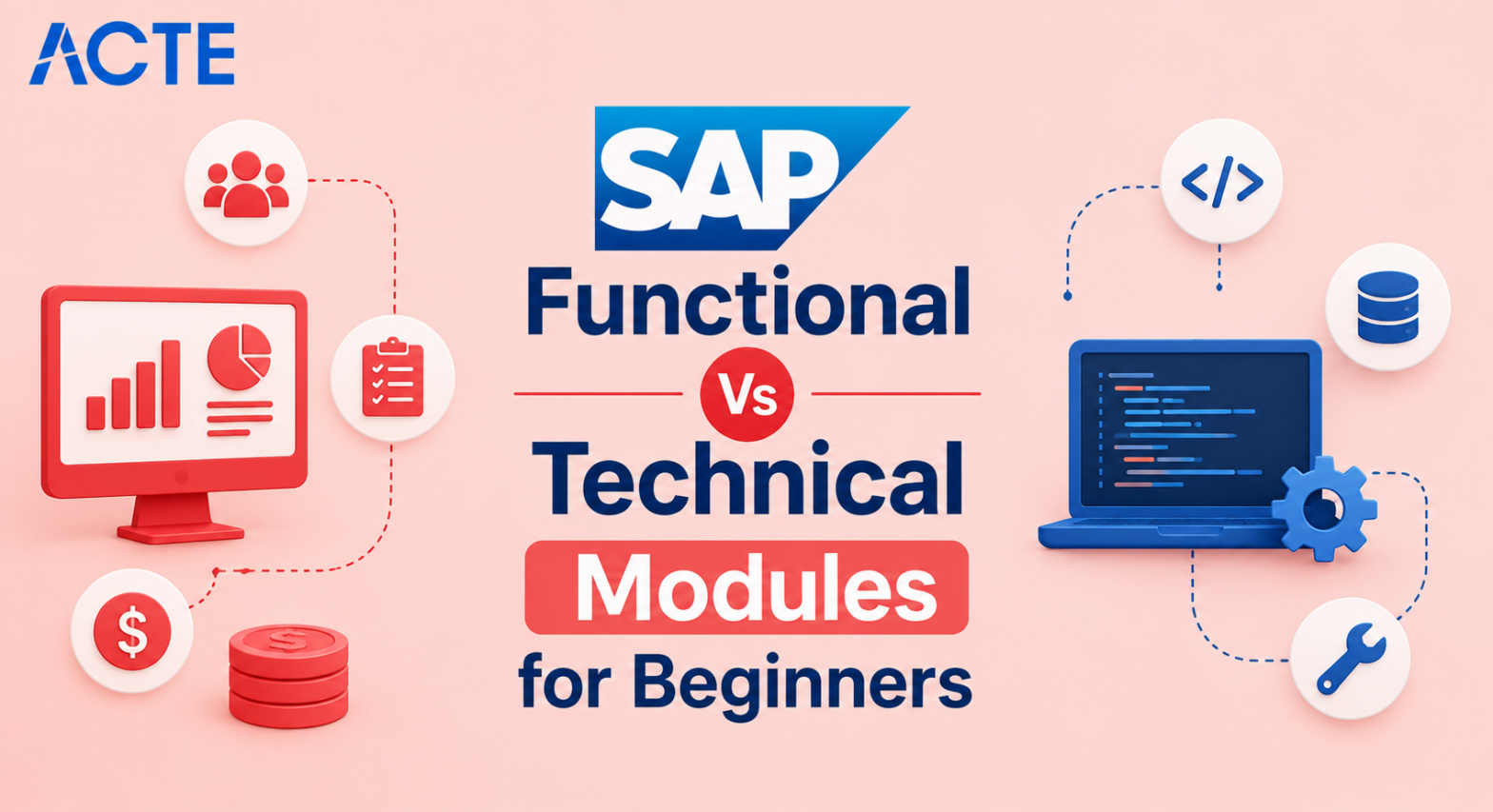
Last updated on 20th May 2026| 11310

- SAP Functional vs Technical Modules
- Understanding Functional Modules
- Core Functional Modules Explained
- Understanding Technical Modules
- Core Technical Tools and Languages
- Matching Your Background to the Right Path
- Career Growth and Salary Differences
- The Rise of Hybrid SAP Consultants
- Conclusion
SAP Functional vs Technical Modules
Choosing between SAP functional and technical modules is the very first major crossroad you face when entering the enterprise software space. This decision will completely dictate your daily work life, the type of people you interact with, and the specific skills you need to learn. Many freshers jump into a module simply because a friend recommended it, without realizing that functional and technical paths require completely different personalities. A functional consultant acts as a bridge between the business side and the software, focusing on processes like accounting or supply chain in SAP BASIS Training. A technical consultant sits behind a screen writing code, building databases, and fixing system errors. Understanding this fundamental split prevents you from spending six months training for a role that makes you miserable. You have to look at your own educational background, your natural problem-solving style, and what kind of daily office environment actually excites you. Making the right choice here sets a smooth trajectory for the next ten years of your career, while the wrong choice leads to burnout and an expensive career pivot. Staying proactive with module selection ensures stronger opportunities, and focusing on personal fit builds credibility. Over time, this mastery positions you as a fresher who can confidently choose the right SAP path.
Understanding Functional Modules
Functional modules are entirely focused on business processes and how a company operates on a day-to-day basis. When a company buys SAP, they are not buying code; they are buying a digital replica of their business. A functional consultant is the person who maps the business requirements to the software. If a company has a specific rule for how they approve purchase orders, the functional consultant configures the system to enforce that exact rule. You do not write code to do this in SAP BASIS Training. You use standard SAP configuration screens to toggle settings, define workflows, and set up approval hierarchies. Your daily life involves sitting in meeting rooms with HR directors, finance managers, or warehouse supervisors, listening to their problems, and translating those problems into system requirements. You essentially speak two languages: the language of business and the language of SAP. This path is perfect for people who have strong communication skills, enjoy understanding how businesses make money, and prefer interacting with humans over staring at lines of code all day. Staying consistent with functional practice ensures stronger preparation, and focusing on business mapping builds credibility. Over time, this mastery positions you as a fresher who can confidently pursue SAP functional consulting.
Ready to Get Certified in SAP BASIS ? Explore the Program Now SAP BASIS Training Offered By ACTE Right Now!
Core Functional Modules Explained
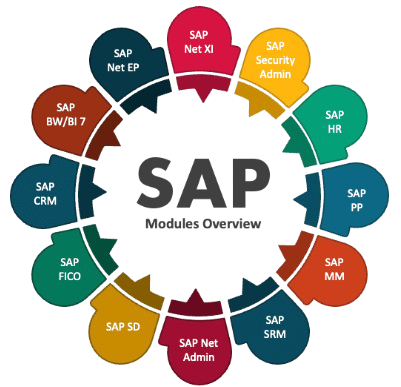
- Financial Accounting and Controlling (FICO): This is the most popular and highest-paying functional module. It handles all external financial reporting, internal cost tracking, and profit analysis. It is the perfect fit for freshers with a commerce background, an MBA in finance, or a strong understanding of accounting principles.
- Materials Management (MM): MM focuses on the supply chain, specifically how a company buys raw materials, manages inventory, and processes vendor invoices and SAP Modules Every Fresher Should learn. It requires logical thinking and is highly suited for freshers with an engineering or supply chain management degree who understand logistics.
- Sales and Distribution (SD): SD covers the entire “Order to Cash” cycle. You configure how a company takes customer orders, sets up pricing structures, ships products, and bills the customer. It is ideal for freshers with a marketing background or those who enjoy fast-paced, client-facing environments.
- Human Capital Management (HCM): HCM deals with the employee lifecycle, from hiring and onboarding to payroll, benefits, and performance reviews. Freshers with an MBA in HR or a psychology degree naturally excel in this module because it mirrors real-world human resources operations.
- Production Planning (PP): PP is heavily used in manufacturing companies to plan factory production lines, schedule machinery, and track the consumption of raw materials. It is a highly specialized niche perfect for freshers who want to work in the automotive or industrial manufacturing sectors.

Understanding Technical Modules
Technical modules are the engineering backbone of the SAP ecosystem. While functional consultants decide what the system should do, technical consultants figure out how to actually make it happen under the hood. If standard SAP configuration screens cannot solve a complex business problem, a technical consultant steps in to write custom code. Your daily life revolves around writing programs in SAP’s proprietary language, designing custom database tables, and building complex data extraction tools. You rarely interact with business users like HR or finance managers thta Why SAP is high demand career option. Instead, you work directly with other technical teams and functional consultants who hand you specification documents. This path is strictly for people who love coding, enjoy deep logical puzzles, and prefer a quiet, focused environment over a boardroom. You are the mechanic who keeps the car running, and when the engine breaks, you are the one who opens it up to fix the wires. It requires a very analytical mindset and a high tolerance for debugging complex, obscure system errors. Staying consistent with technical practice ensures stronger preparation, and focusing on coding builds credibility. Over time, this mastery positions you as a fresher who can confidently pursue SAP technical consulting.
Excited to Obtaining Your SAP BASIS Certificate? View The SAP BASIS Training Offered By ACTE Right Now!
Core Technical Tools and Languages
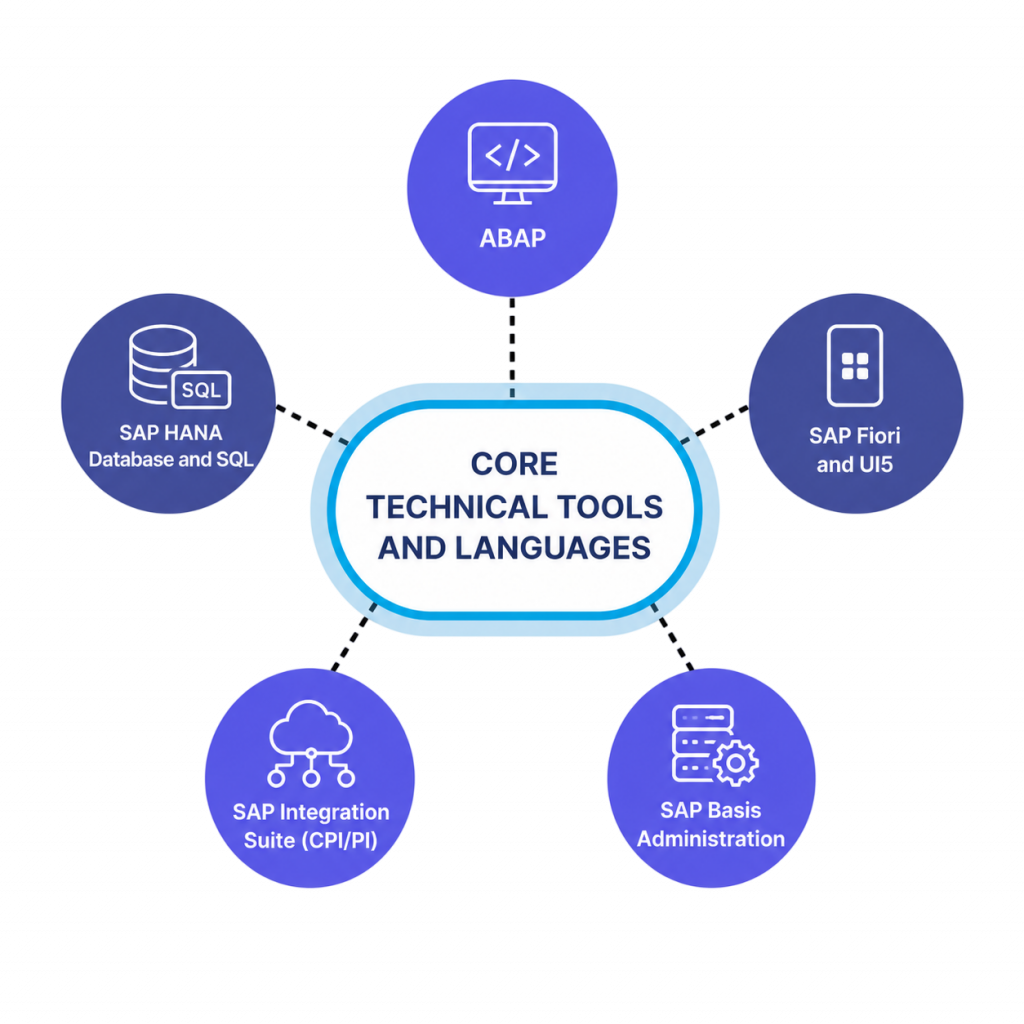
- ABAP (Advanced Business Application Programming): ABAP is the core programming language of SAP and best SAP courses for freshers . It looks similar to COBOL but is heavily object-oriented now. Every technical consultant must master ABAP to write custom reports, build custom screens, and enhance standard SAP functionality.
- SAP HANA Database and SQL: SAP S/4HANA runs on an in-memory database. Technical consultants must know SQL to query data directly, build stored procedures, and create database views that functional consultants can use for reporting.
- SAP Fiori and UI5: Fiori is the modern, app-like user interface for SAP. learn More about SAP FICO basics every freshers should know Technical developers use UI5, a JavaScript framework, to build custom, responsive web applications that look beautiful on both desktops and mobile phones.
- SAP Integration Suite (CPI/PI): Companies rarely use SAP in isolation. Technical consultants use integration tools to connect SAP with external systems like Salesforce, Workday, or custom legacy applications, allowing data to flow seamlessly between different software.
- SAP Basis Administration: Basis is the system administration side of SAP. Basis consultants handle server installations, database maintenance, user security, system upgrades, and performance tuning. It is essentially the IT infrastructure role within the SAP world.
Matching Your Background to the Right Path
SAP Functional Vs Technical Modules Aligning your educational background with the right path is the safest way to ensure success, but it is not the only factor. Freshers with a Bachelor of Commerce, Chartered Accountancy, or an MBA should absolutely choose a functional module like FICO or SD. Trying to force a non-programmer into a technical ABAP role usually ends in failure because the learning curve is too steep. On the flip side, freshers with a Bachelor of Technology in Computer Science or IT have a choice. If you genuinely love coding and building software, go technical. larn More About SAP S4 Hana explained for beginners. However, many engineers actually prefer functional roles because they enjoy the mix of logic and business strategy. You have to honestly assess your personality. Do you want to spend your day talking to clients and mapping business flows, or do you want to put your headphones on and write code for eight hours? Do not let industry stereotypes force you into a box. Pick the path that matches your natural working style. Staying proactive with background alignment ensures stronger opportunities, and focusing on personality fit builds credibility. Over time, this mastery positions you as a fresher who can confidently choose between SAP functional and technical modules.
Are You Considering Pursuing a Gen AI Master’s Degree? Enroll For SAP BASIS Expert Masters Program Training Course Today!
Career Growth and Salary Differences
- Entry-Level Salary: Technical consultants often start with slightly higher salaries than functional freshers. Because coding is a hard, measurable skill, companies pay a premium for freshers who can immediately write ABAP code or build Fiori apps without hand-holding.
- Long-Term Earning Potential: While technical consultants start higher, functional consultants usually catch up and often surpass them in the long run. Experienced functional consultants who become Solution Architects or Project Managers command massive salaries because they manage entire multi-million-dollar implementations.
- Career Progression Path: Functional consultants typically move from Junior Consultant to Lead Consultant, then to Project Manager or Delivery Manager this are Future Scope Of SAP career For Freshers. Technical consultants move from Junior Developer to Senior Developer, then to Technical Architect or Basis Administrator.
- Demand in the Job Market: There are generally more functional jobs available in the market because every project needs a mix of finance, sales, and supply chain experts. Technical jobs are slightly more niche but face less competition because fewer people know how to code.
- Outsourcing and Freelancing: Technical consultants have an easier time finding remote freelance work or independent contracting gigs and Best SAP Certification for beginners. Companies frequently hire freelance ABAP developers for short-term coding fixes, while functional consulting usually requires long-term, on-site client interaction.
Set to Ace Your SAP BASIS Job Interview? Check Out Our Blog on SAP BASIS Interview Questions & Answer
The Rise of Hybrid SAP Consultants
The modern SAP landscape is aggressively blurring the lines between functional and technical roles, creating a massive demand for hybrid consultants. In the early days of SAP, a functional person would write a Word document describing a report, hand it to a technical person, and wait three weeks for the code. With the introduction of S/4HANA and tools like SAP Fiori and Analytics, that workflow is dead. Companies now expect functional consultants to have enough technical knowledge to build their own dashboards, write basic ABAP code, or at least understand the data model well enough to troubleshoot errors without calling a developer. Similarly, technical consultants are expected to understand basic business processes so they do not write code that breaks financial compliance rules IN SAP BASIS Training. As a beginner, you should absolutely pick one primary path to start. However, the fastest way to skyrocket your career is to learn the other side as a secondary skill. Being a functional FICO consultant who can also write custom ABAP code makes you a rare, highly paid unicorn in the consulting world. Staying proactive with hybrid learning ensures stronger opportunities, and focusing on cross-skills builds credibility. Over time, this mastery positions you as a fresher who can confidently thrive as a hybrid SAP consultant.
Conclusion
Deciding between SAP Functional Vs Technical Modules comes down to a simple question, do you prefer business or engineering? There is no wrong answer, and both paths offer incredibly lucrative, long-term careers with excellent job security. Functional modules let you dive deep into how global corporations manage their money, people, and supply chains IN SAP BASIS Training. Technical modules let you build the actual engines that power those processes. Do not make this decision based on which one pays a thousand dollars more in your first year AND . Make it based on what kind of work you actually want to do every single day for the next decade. Once you choose your lane, commit to mastering it completely, but always keep one eye on the other side of the fence. The SAP industry rewards specialists, but it worships professionals who can seamlessly bridge the gap between a business problem and a technical solution. Pick your foundation, build your skills, and let your natural interests guide your success. Staying disciplined with your chosen path ensures stronger opportunities, and focusing on hybrid awareness builds credibility. Over time, this strategy positions you as a fresher who can confidently grow in the SAP ecosystem.